247 Restore Texas
3 Services

Biohazard Cleanup Services in Texas

Handled quietly and thoroughly, in unmarked vehicles, by technicians who do this work every week. You do not need to be present, and you do not need to see the area.

Biohazard Cleanup services in Texas
24/7 Response
Every day of the year
Licensed & Insured
Including Texas mold licensing
926 Texas Cities
All 254 counties covered
Insurance Support
Claim-ready documentation

What Biohazard Cleanup Covers

Most people reading this page are here because something happened that they never expected to deal with. A death at home, an incident the police have been involved in, or a family member whose living conditions have become unsafe. None of it is ordinary, and none of it is something you should be expected to handle yourself.

The practical reality is that biological contamination goes further than the area you can see. It reaches into flooring, through subfloor seams, into wall cavities and soft furnishings. That is why this is remediation work rather than cleaning, and why it is governed by the OSHA bloodborne pathogen standard rather than left to judgment.

Our three services in this category cover different situations, but they share the same approach. Unmarked vehicles. No judgment. Nothing discussed with neighbors. You decide how involved you want to be, including not at all.

Our Biohazard Cleanup Services

Each one handles a different situation. The overview under each explains where it fits.

Biohazard Cleanup in Texas

Biohazard Cleanup

Discreet, compliant biohazard cleanup and decontamination services for Texas homes and businesses.

The broad service, covering unattended deaths, accidents, illness, bodily fluids, and other biological contamination in a home or business.

Crime Scene Cleanup in Texas

Crime Scene Cleanup

Compassionate, professional crime scene and trauma cleanup services for Texas families and property managers.

For properties where law enforcement has been involved. Adds coordination with the investigating agency on scene release, and removal of the fingerprint powder and chemical residue that forensic processing leaves behind.

Hoarding Cleanup in Texas

Hoarding Cleanup

Respectful, thorough hoarding cleanup services that help Texas families restore safety and order to their homes.

For properties where accumulation has made a home unsafe or unlivable. Approached as a person-first process, sorting rather than clearing, at a pace the resident can manage.

Which Service Do You Need?

Match what you are seeing to the service that fits. If none of these quite describe it, call and we will work it out.

Someone died at home

Biohazard cleanup. If the death was unattended or went undiscovered for a period, contamination will have reached the subfloor and the structure, not only the surface. Families do not need to be present.

Police or investigators were involved

Crime scene cleanup. We coordinate with the investigating agency on when the scene is released, and we remove forensic processing residue, which is often left in rooms unrelated to the incident.

A home has become unsafe to live in

Hoarding cleanup. Handled as a sorting process with the resident, recovering documents, photographs, and valuables, rather than a clear-out done to someone.

There has been an accident or injury

Biohazard cleanup covers blood and bodily fluid contamination in homes, vehicles, and workplaces, including industrial incidents.

There is an odor and you cannot find the source

Decomposition odor travels through subfloor and cavities and persists long after the visible area is cleaned. Biohazard cleanup addresses the material holding it rather than masking it.

You are arranging this for someone else

Common, and entirely workable. We regularly coordinate with family members, executors, property managers, and adult protective services, and we keep whoever is handling it informed without involving anyone who should not be.

Most Jobs Need More Than One

These situations frequently arrive together. A hoarding property found after a death is a hoarding job and a biohazard job at once. A crime scene in a rental is also a landlord matter with its own documentation needs. An unattended death discovered late involves both decontamination and odor work through the structure.

Hoarding conditions in particular tend to conceal other problems. Once material is cleared, what surfaces underneath is often pest infestation, mold from a leak nobody could reach, plumbing that failed months ago, or structural damage from sustained weight and moisture. We assess for that rather than finishing at the point where the rooms are empty, because an empty unsafe house is not a finished job.

The practical consequence is that a scope written from a phone call is usually incomplete. We would rather look first, tell you what is actually there, and let you decide, than start work on a description and present you with surprises later in a week where you have had enough of those.

What Causes Biohazard Cleanup

Understanding the source matters, because the same failure repeats until it is addressed.

Unattended Death

A death that goes undiscovered for a period. Contamination and odor reach the subfloor and the structure, which is why the work extends well past the visible area.

Accidents and Injuries

Household accidents, workplace and industrial incidents, and medical emergencies that leave blood or bodily fluids requiring proper decontamination.

Violent Incidents

Scenes where law enforcement has been involved, which carry both biological contamination and the chemical residue of forensic processing.

Severe Accumulation

Hoarding conditions that build over years, often alongside grief, illness, isolation, or reduced mobility, until a home is no longer safe to occupy.

Animal and Pest Contamination

Animal waste accumulation and infestation, which carry their own pathogens and frequently appear alongside other conditions in a neglected property.

Sewage and Waste Exposure

Failed plumbing left unresolved over a long period, which produces biological contamination in materials throughout the affected part of a building.

What Happens While You Wait

First Days

Contamination Moves Into Materials

Biological material is absorbed by flooring, subfloor, and soft furnishings. Surface cleaning stops being sufficient early, well before the area looks different.

First Weeks

Odor Enters the Structure

Odor compounds move into subfloor, framing, and wall cavities, and circulate through ductwork. At this stage the smell is coming from the building rather than from anything still in the room.

One to Three Months

Secondary Problems Develop

Pests are drawn to the material, and moisture held against flooring and framing creates conditions for mold. These compound the original contamination rather than replacing it.

Longer

The Scope Reaches the Structure

What began as decontamination of a room becomes removal of flooring, subfloor, and sections of wall. There is no deadline here, and the work can be done whenever you are ready. This is only what changes while it waits.

Our Process

  1. 1

    A Private First Conversation

    We ask what happened and what the property is like now, enough to send the right crew and equipment. You do not need to describe more than you want to, and nothing is discussed with anyone else.

  2. 2

    Discreet Arrival and Assessment

    Unmarked vehicles, no company signage, no equipment left on the lawn. Our technicians assess the full extent, including what has reached subfloor and cavities, and explain what the work involves.

  3. 3

    Containment and Protection

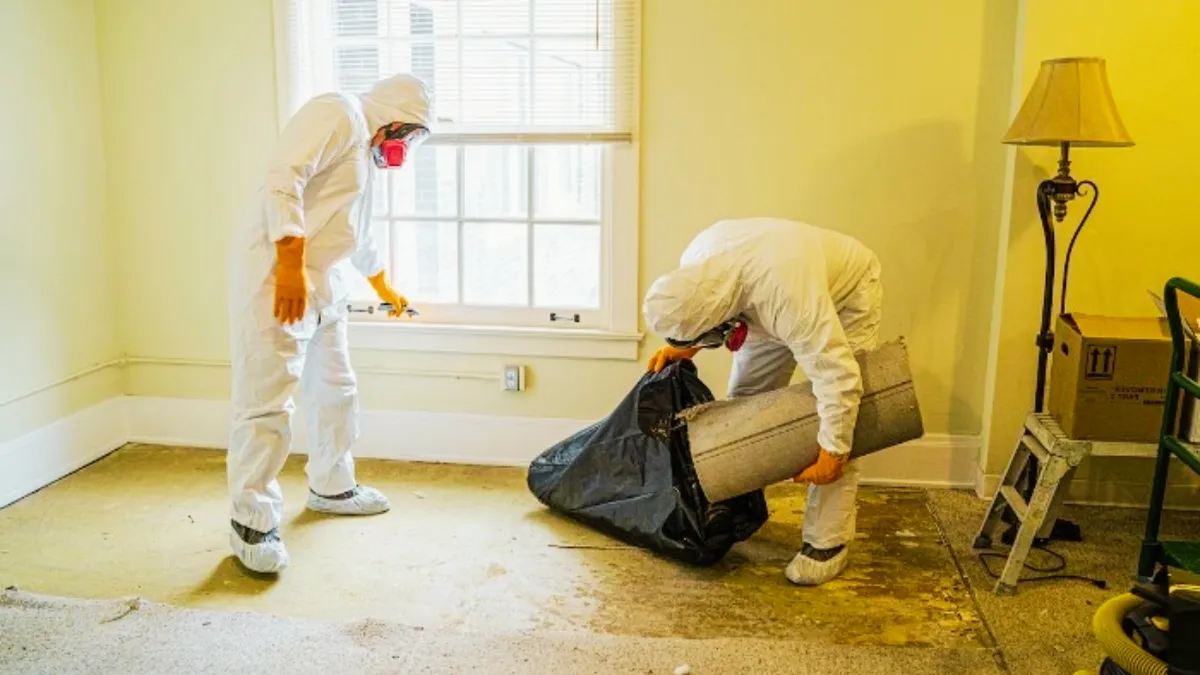
    The affected area is sealed off with negative air and HEPA filtration before anything is disturbed, so contamination and odor do not travel into the rest of the property.

  4. 4

    Removal and Recovery

    Contaminated porous material is removed and handled as regulated waste. On hoarding work this stage is a sorting process, with documents, photographs, and valuables recovered and set aside rather than discarded.

  5. 5

    Decontamination and Odor Treatment

    Remaining surfaces are cleaned with EPA-registered disinfectants, and odor is treated in the materials holding it rather than covered over.

  6. 6

    Verification and Restoration

    Surfaces are verified, the area is restored to a safe and usable condition, and you get documentation of what was done and what was removed.

The Equipment We Use

Personal Protective Equipment

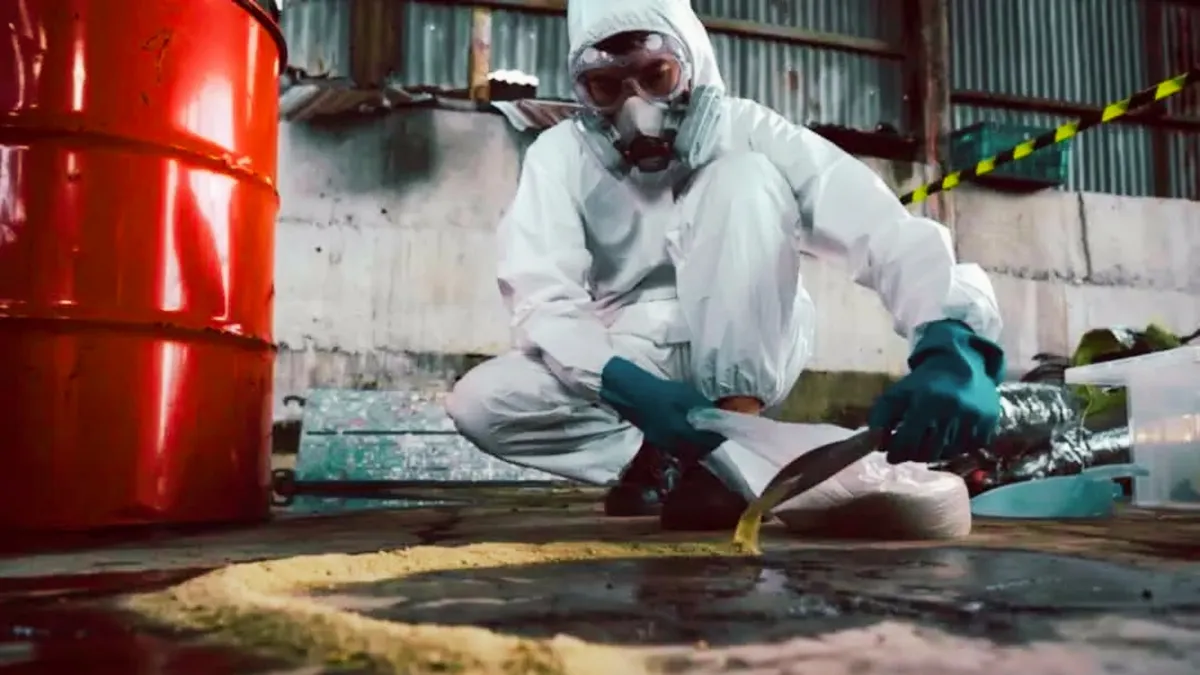
Full protective equipment appropriate to biological hazards, used to the OSHA bloodborne pathogen standard that governs this work.

Containment and Negative Air

Sealed work areas held at negative pressure with HEPA filtration, so nothing disturbed during removal reaches the rest of the building.

EPA-Registered Disinfectants

Hospital-grade products rated for the pathogens involved, applied to surfaces that remain after contaminated material is removed.

Regulated Waste Handling

Contaminated material is contained, transported, and disposed of as regulated medical waste rather than household trash, with the documentation that requires.

Odor Treatment Systems

Hydroxyl generators, enzyme treatments, and sealing where odor has reached framing that cannot be fully removed.

Surface Verification

Testing to confirm that decontaminated surfaces are clean, rather than relying on how an area looks at the end of the work.

Working With Your Carrier

Many Texas homeowner policies include some coverage for biohazard and trauma cleanup, though it varies considerably between policies and is frequently subject to its own limit. It is worth asking your carrier directly rather than assuming either way, and we can speak to an adjuster on your behalf if that is easier.

For families affected by a violent crime, the Texas Crime Victims Compensation Program, administered by the Office of the Attorney General, can assist eligible applicants with crime scene cleanup costs. The program sets its own eligibility rules, limits, and deadlines, and a police report is generally part of an application. We can point you to it, though we cannot promise any particular outcome.

Hoarding cleanup is less often covered, since carriers typically treat accumulation as a maintenance matter. Where it has produced a covered consequence, such as a plumbing failure or resulting water damage, that portion may be treated differently from the clearance work itself.

We document conditions before anything is touched, record what is removed, and provide the scope in a form a carrier or a program can review. That record also tends to matter in landlord and estate situations, separately from any claim.

What Affects the Cost

We assess the property before quoting, because these variables change the scope substantially.

  • The size of the affected area and how far contamination has traveled into the structure
  • Whether contamination reached subfloor, wall cavities, or ductwork
  • The volume of porous material requiring removal and regulated waste disposal
  • How long conditions were present before the work began
  • The extent of odor treatment the structure needs
  • For hoarding work, the volume of material and how much sorting and recovery is wanted
  • Whether secondary problems such as pests, mold, or plumbing failures are found underneath
  • Whether repairs follow the decontamination, and what has to be replaced

What This Looks Like in Texas

Texas heat changes the timeline on this work more than most people expect. In an unconditioned property through a Texas summer, decomposition progresses faster and contamination reaches the subfloor sooner than it would in a cooler climate. That is a practical fact about what the work will involve rather than a reason to hurry a decision, and we would rather you heard it from us at the assessment than discovered it later.

For families affected by violent crime, the Texas Crime Victims Compensation Program is administered by the Office of the Attorney General and can assist eligible applicants with crime scene cleanup costs. Eligibility rules, limits, and filing deadlines are set by the program, and a police report is generally required. Many families are never told this exists, which is the main reason we mention it.

Coverage across the state matters here in a way it does not for other services. These situations happen in small towns and rural properties as often as in cities, and they are exactly the addresses that territory-based operators decline. We cover 926 Texas cities across all 254 counties, and a rural property gets the same crew, the same equipment, and the same discretion as a job in Houston.

Why Texans Choose Us for Biohazard Cleanup

Discreet by Default

Unmarked vehicles, no signage, no equipment left visible outside. Neighbors have no reason to know we were there, and we do not discuss the work with anyone who is not involved.

You Do Not Have to Be There

Families are not expected to be present, to view the area, or to handle anything themselves. We coordinate with whoever you nominate and keep you informed at the level you want.

Handled to the OSHA Standard

Containment, protective equipment, EPA-registered disinfectants, and regulated waste disposal, rather than a cleaning crew working outside their depth.

Without Judgment

Particularly on hoarding work. Our technicians have done this many times, the situation is not unusual to them, and nobody comments on it.

Biohazard Cleanup Services in Your City

Available in all 926 Texas cities we cover, across every one of the 254 counties.

Browse all 926 Texas cities →

Frequently Asked Questions

Do I have to be at the property while you work?

No. Many families never enter the affected area at all, and that is a reasonable choice. We can coordinate access with a family member, executor, property manager, or anyone you nominate, and keep you updated by phone at whatever level of detail you want.

Will the neighbors know?

There is nothing identifying about our arrival. Vehicles are unmarked, there is no signage, and equipment stays inside or screened. The work is not discussed with anyone who is not directly involved.

When can cleanup start after a death or an incident?

For anything law enforcement is handling, work begins once the investigating agency releases the scene. We coordinate that with them directly rather than asking you to chase it, and there is no pressure from our side about timing.

Why does the work go beyond the area I can see?

Biological material is absorbed by flooring, subfloor, and soft furnishings, and odor moves into framing and cavities. Treating only the visible surface leaves contamination in the structure, which is why flooring and sometimes subfloor have to come out.

For hoarding, will everything be thrown away?

No. We sort rather than clear. Documents, photographs, medication, and items of value are recovered and set aside for the resident or the family. Where the resident wants to be involved in those decisions, we work at their pace.

Can you work with a family member who is resistant to the cleanup?

We have done so many times. The approach is to move at a pace the person can manage rather than imposing a schedule, and we are used to coordinating with family members, caseworkers, and adult protective services where they are involved.

Is any of this covered by insurance?

Often partly. Many Texas policies include some coverage for biohazard and trauma cleanup, subject to their own limits, and the Texas Crime Victims Compensation Program can assist eligible families with crime scene cleanup costs. We can speak with an adjuster on your behalf, though the decision rests with the carrier or the program.

What if something else is found underneath?

It happens, particularly on hoarding work, where pests, mold, failed plumbing, or structural damage frequently surface once material is cleared. We tell you what we find, explain the options, and let you decide. We will not start additional work without talking to you first.

Still Not Sure?

If you are dealing with any of this, one phone call is enough to find out what is involved. There is no pressure to decide anything on that call, and nothing you tell us goes any further.

Need Biohazard Cleanup Help Now?

Get a licensed technician to your property. Free estimate, no obligation.

Call Now — (866) 370-1338
Call 24/7 — (866) 370-1338