247 Restore Texas
3 Services

Mold Removal Services in Texas

Inspection, remediation, and crawl space work, under the Texas rules that govern how mold jobs have to be handled. Licensed, insured, and honest about when you do not need us.

Mold Removal services in Texas
24/7 Response
Every day of the year
Licensed & Insured
Including Texas mold licensing
926 Texas Cities
All 254 counties covered
Insurance Support
Claim-ready documentation

What Mold Removal Covers

Mold is a moisture problem that grew. That sounds obvious, and it is the single most useful thing to understand before hiring anyone, because removing visible growth without correcting what made the material wet guarantees it comes back in the same place within a season.

Texas regulates this work more closely than most states do. Mold remediation is licensed by the Texas Department of Licensing and Regulation under Texas Occupations Code Chapter 1958, projects affecting 25 contiguous square feet or more trigger licensing, notification, and work plan requirements, and on those projects the assessor and the remediator have to be independent parties. That last rule exists specifically to stop one company inflating a scope it then gets paid to perform.

Our three mold services are shaped by those rules. Inspection establishes what you are dealing with, remediation removes it under containment, and crawl space work addresses the underfloor conditions that feed a great deal of Texas mold in the first place.

Our Mold Removal Services

Each one handles a different situation. The overview under each explains where it fits.

Mold Remediation in Texas

Mold Remediation

Certified mold remediation to safely remove mold colonies and address the moisture source in Texas homes and businesses.

The removal work itself, performed under containment with negative air and HEPA filtration. This is the service the Texas licensing rules govern once a project reaches 25 contiguous square feet.

Mold Inspection & Testing in Texas

Mold Inspection & Testing

Professional mold inspection and testing to identify hidden mold growth and air quality issues in Texas properties.

Assessment and testing, including moisture mapping and sampling. On licensed projects Texas requires this to be a separate party from whoever remediates, which is the main reason it stands as its own service.

Crawl Space Mold Removal in Texas

Crawl Space Mold Removal

Targeted mold removal and moisture control for crawl spaces, a common problem area in humid Texas climates.

For growth under the floor rather than inside the living space. Common in older pier-and-beam Texas homes, where a damp crawl space pushes humidity upward into the rooms above.

Which Service Do You Need?

Match what you are seeing to the service that fits. If none of these quite describe it, call and we will work it out.

You suspect mold but cannot find it

A persistent musty smell with nothing visible. Start with mold inspection. Moisture mapping and thermal imaging find the wet material, and sampling establishes what is actually present.

You can see growth on a wall or ceiling

Mold remediation. If the affected area reaches 25 contiguous square feet, Texas licensing, notification, and work plan requirements apply, and the assessment has to come from an independent party.

The smell is strongest at floor level

Crawl space mold removal. Damp air under a pier-and-beam floor rises into the living space, so the odor shows up in the rooms above while the growth is underneath them.

It appeared after a leak or flood

Mold remediation, paired with fixing the moisture source. Growth that follows a water loss will return if the leak, drainage problem, or humidity issue behind it is left alone.

You need it documented for a sale or dispute

Mold inspection. An assessment with sampling and a written report is what a transaction, a landlord dispute, or an insurance question actually needs, separate from any removal work.

The patch is small and the leak is already fixed

You may not need a licensed remediation project at all. Below the 25 square foot threshold the rules are different, and we will tell you plainly when that is the situation.

Most Jobs Need More Than One

A full mold job usually touches all three services, in a specific order that Texas rules partly dictate. An assessment establishes the extent and the moisture source. Remediation removes the contaminated material under containment. Where the source turns out to be a crawl space, the underfloor work is what stops the problem recurring rather than just clearing this round of it.

The independence requirement shapes how this runs in practice. On a licensed project the company that assesses your property cannot be the company that remediates it, and clearance after the work is verified by an independent assessor rather than by whoever did the removal. That is a protection worth understanding before you hire anybody, because an outfit offering to inspect and remediate as one package on a large project is not describing a compliant job.

The moisture source is the thread running through all three. A crawl space with a failed vapor barrier, a slab leak, a roof that has been admitting water since the last hail storm, or simply a house that runs humid will keep producing growth no matter how thoroughly the current patch is removed. We identify and address it as part of the work rather than treating it as somebody else problem.

What Causes Mold Removal

Understanding the source matters, because the same failure repeats until it is addressed.

Unresolved Water Damage

The most common origin by a wide margin. A leak dried on the surface while the material behind it stayed wet, and growth established inside the cavity within a couple of days.

Sustained Indoor Humidity

Across most of Texas, ambient humidity alone is enough to support growth on materials that stay damp. Undersized or failing air conditioning makes it worse by leaving moisture in the air.

Crawl Space Conditions

Failed vapor barriers, poor drainage, and standing water under pier-and-beam homes feed humidity upward into the living space through the stack effect.

HVAC Condensate Failures

Blocked condensate lines and overflowing drain pans release water slowly inside ceilings and wall cavities, which is why the damage is usually advanced before anything becomes visible.

Roof and Envelope Leaks

Hail-damaged shingles and wind-lifted flashing admit small amounts of water repeatedly, which is ideal for growth even though no single event looks like a flood.

Poor Ventilation in Wet Rooms

Bathrooms and laundry areas without working extraction hold moisture against drywall and grout long enough for growth to take hold on the surface.

What Happens While You Wait

24 to 48 Hours

Growth Begins

Mold can start establishing on consistently wet material within roughly a day or two. At this stage it is usually invisible and confined to the material that got wet.

First Weeks

Colonies Spread

Growth moves across the damp area and into adjoining materials. Odor becomes noticeable in the room, often before anything is visible on a surface.

1 to 3 Months

It Reaches the Cavity and the Ductwork

Growth works behind finishes and into insulation, and the HVAC system distributes spores to parts of the building with no moisture problem of their own.

Beyond Three Months

Materials and Scope Both Go

Drywall, insulation, and subfloor stop being salvageable, the contained work area grows, and a project that might have stayed under the licensing threshold no longer does.

Our Process

  1. 1

    Assess and Map the Moisture

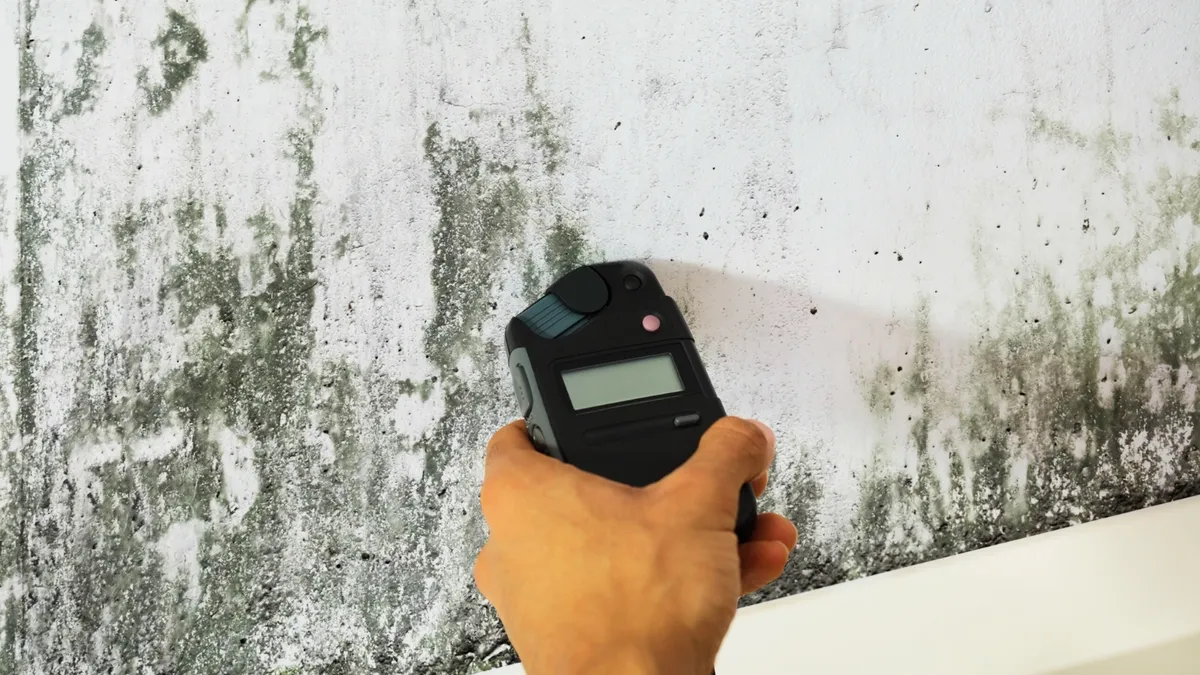
    Moisture meters, thermal imaging, and sampling where it is warranted establish how far growth extends and what made the material wet. Extent decides whether the Texas licensing threshold applies.

  2. 2

    Contain the Work Area

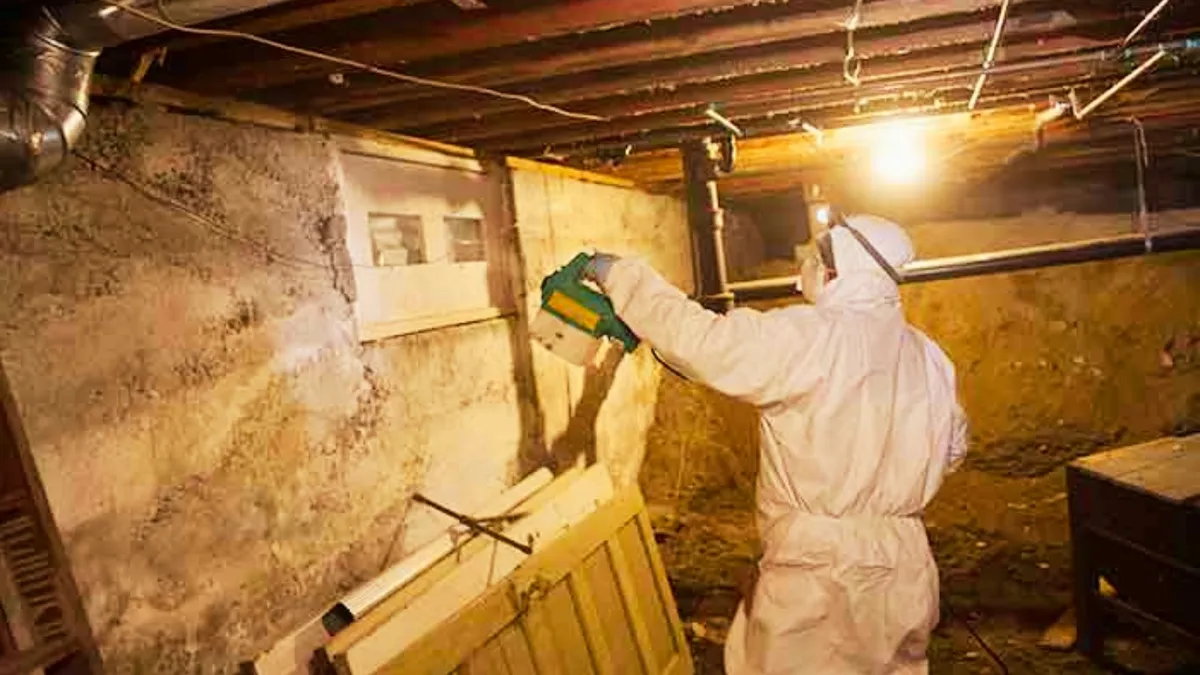
    Barriers and negative air pressure isolate the area before anything is disturbed. Cutting into growth without containment is how a problem in one room becomes a problem throughout a building.

  3. 3

    Remove Contaminated Material

    Affected porous material is cut out to a clean margin and bagged inside containment. Non-porous surfaces are cleaned rather than removed where cleaning can reach the growth.

  4. 4

    Correct the Moisture Source

    The leak, drainage problem, vapor barrier, or humidity issue behind the growth is addressed. Skipping this step is what produces a repeat job in the same spot the following season.

  5. 5

    Dry and Treat

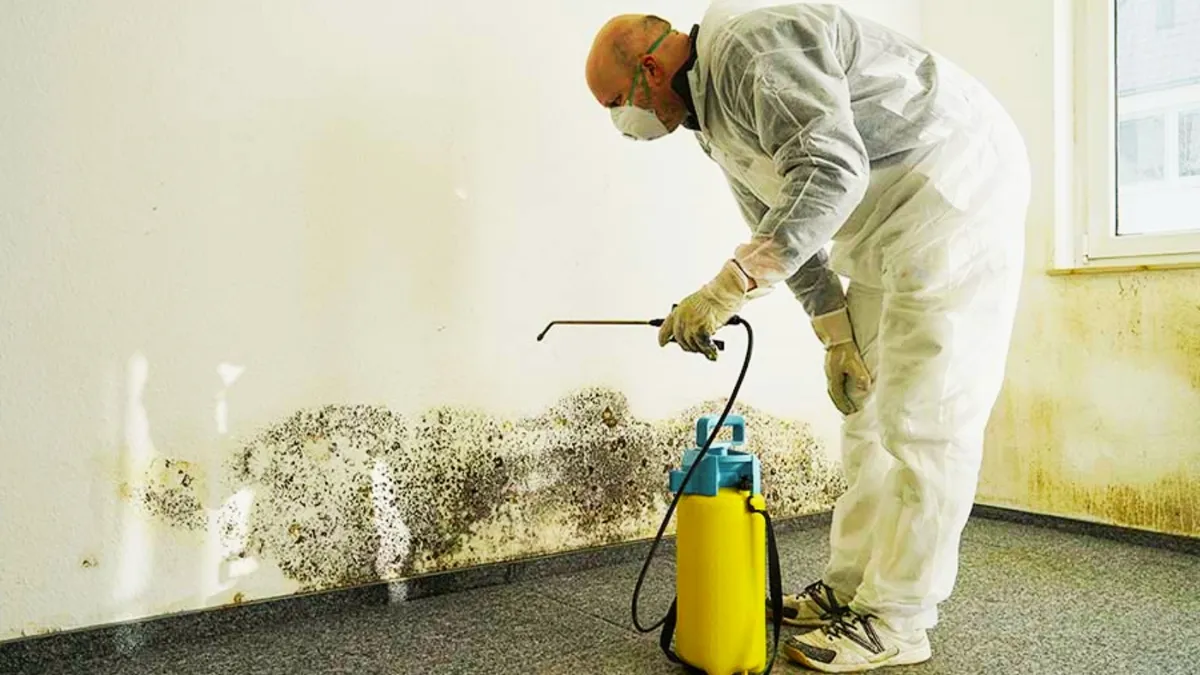
    The area is dried to a measured target and treated with EPA-registered products, with HEPA filtration running throughout to capture what removal disturbs.

  6. 6

    Verify Independently

    On licensed projects, clearance is confirmed by an independent assessor rather than by the company that performed the removal, and the documentation follows the Texas requirements.

The Equipment We Use

Negative Air Machines

Hold the work area at lower pressure than the rest of the building, so air moves into containment rather than carrying spores out of it.

Containment Barriers

Sealed polyethylene enclosures with controlled entry, built before any material is cut, disturbed, or removed.

HEPA Filtration and Vacuums

Air scrubbers and HEPA vacuums capture particles that removal work releases, during the job and after it.

Moisture Meters and Thermal Imaging

Locate the wet material feeding the growth, which is frequently somewhere other than where the visible patch is.

Air and Surface Sampling

Collected during assessment and analyzed by a laboratory, giving a documented picture of what is present rather than a judgment made by eye.

Dehumidification

The area is dried to a measured target after removal, because contained growth that is removed from a still-damp structure simply returns.

Working With Your Carrier

Mold coverage in Texas is narrower than most property owners expect. Policies commonly cover mold that results from a sudden covered event, such as a burst supply line, while excluding growth that follows a long-running leak or deferred maintenance. The distinction turns on the cause, which is why establishing the moisture source matters for the claim as well as for the repair.

Many Texas policies carry a specific mold sublimit, separate from and considerably lower than the dwelling coverage. Checking that figure before you need it is worthwhile, since it frequently sets the practical ceiling on what a carrier will contribute.

An assessment can cut both ways in a claim. A report that documents a sudden failure supports coverage, while one that documents months of visible deterioration may support a denial. We tell you that before testing rather than after, because you are entitled to know what a document you are paying for might establish.

We produce the records a carrier expects: photographs before work begins, moisture readings, the extent of containment, an itemized account of what was removed, and the independent clearance documentation the Texas rules require on licensed projects.

What Affects the Cost

We assess the property before quoting, because these variables change the scope substantially.

  • The size of the affected area, and whether it crosses the 25 contiguous square foot licensing threshold
  • How much containment the work requires, and how many separate work areas there are
  • Which materials are affected, since porous material is removed while non-porous surfaces can often be cleaned
  • Whether the growth has reached wall cavities, insulation, or HVAC ductwork
  • What is needed to correct the moisture source, which can range from a small repair to drainage work
  • Whether independent assessment and clearance testing are required for the project
  • Access difficulty, particularly in crawl spaces and tight underfloor areas
  • Whether reconstruction follows the removal, and the finish level being restored

The Texas Rules That Govern Mold Work

Mold remediation is a licensed activity in Texas, overseen by the Texas Department of Licensing and Regulation under Texas Occupations Code Chapter 1958. Projects affecting 25 contiguous square feet or more trigger licensing, notification, and work plan requirements. Below that threshold the rules are different, and a smaller patch with the moisture source already corrected may not need a licensed remediation project at all. We will tell you when that is your situation, because the alternative costs us one job and costs you trust we would rather keep.

The rule most worth knowing is the independence requirement. On a licensed project the mold assessor and the mold remediator have to be separate parties, and clearance after the work is verified by the assessor rather than by the company that did the removal. The rule exists to stop anyone from writing a scope they then profit from performing. If a company offers to both inspect and remediate a large project as a single package, that is worth questioning.

The climate is why Texas needed those rules in the first place. Humidity across most of the state keeps materials damp long enough for growth to establish, and older housing stock adds the rest. Pier-and-beam construction with ventilated crawl spaces is common in established neighborhoods and throughout East Texas, and a damp crawl space feeds moist air upward into the living space continuously, which is why mold here frequently starts underneath a house rather than inside it.

Why Texans Choose Us for Mold Removal

Licensed for Texas Mold Work

We carry the state licensing that remediation projects require, and we follow the notification and work plan rules rather than treating them as paperwork.

We Say When You Do Not Need Us

If the area falls under the threshold and the moisture source is already fixed, we tell you that instead of selling a project you do not need.

The Source Gets Fixed

Removal without correcting the moisture behind it produces a repeat job. We address the leak, drainage, or humidity problem as part of the work.

Containment on Every Job

Negative air and HEPA filtration from the start, so disturbing growth in one room does not distribute it through the rest of the building.

Mold Removal Services in Your City

Available in all 926 Texas cities we cover, across every one of the 254 counties.

Browse all 926 Texas cities →

Frequently Asked Questions

Which of these three services should I start with?

If you can see the growth and know roughly how far it extends, remediation. If you only suspect it, or need it documented for a sale or dispute, start with inspection. If the smell is strongest low in the house and it sits on a pier-and-beam foundation, crawl space work is the likely answer.

What is the 25 square foot rule?

Texas licensing, notification, and work plan requirements apply to mold remediation projects affecting 25 contiguous square feet or more. Below that, the requirements differ. It is a real threshold in state law rather than an industry convention, and it affects how your project has to be run.

Why can one company not both test and remove?

On licensed projects Texas requires the mold assessor and the mold remediator to be independent parties. The rule prevents the same company from writing a scope and then being paid to perform it, and it means clearance is verified by someone other than whoever did the removal.

Can mold be removed permanently?

Spores exist everywhere, indoors and out, so no building is ever mold free in a literal sense. Remediation returns levels to normal and removes contaminated material. What makes it last is correcting the moisture, since growth returns wherever material stays wet.

Is black mold more dangerous than other kinds?

The species most people mean, Stachybotrys, gets more attention than the evidence supports, and visual identification of species is unreliable anyway. Any substantial indoor growth warrants proper handling, and the response does not change much based on color.

Can I just use bleach on it?

On a hard, non-porous surface with the moisture already fixed, household cleaning can handle a small patch. On porous material, bleach treats the surface while leaving growth in the structure beneath, and it adds water to a material that is already too wet.

Will my insurance cover mold removal?

Sometimes, and usually with a sublimit. Policies commonly cover mold resulting from a sudden covered event while excluding growth that followed a long-running leak. Worth checking your specific mold limit with your agent, since it tends to be much lower than the dwelling coverage.

Do I need to leave the property during remediation?

Often not. Containment and negative air are designed to keep the work area isolated from the rest of the building. Whether staying is sensible depends on the extent, the location, and whether anyone in the household has respiratory sensitivities, and we give you a straight answer at the assessment.

Still Not Sure?

The useful first step with mold is finding out what you actually have and what made the material wet. Call and describe what you are seeing or smelling, and we will tell you which service fits, whether the Texas licensing threshold applies, and what the work would involve.

Need Mold Removal Help Now?

Get a licensed technician to your property. Free estimate, no obligation.

Call Now — (866) 370-1338
Call 24/7 — (866) 370-1338