Humidity turns the water half of a fire loss into the urgent half. Across most of the state, materials soaked by suppression water will not dry on their own, and the building often sits unsafe to enter for a day or more before anyone can start. By the time drying equipment goes in, that water has a head start no ordinary pipe burst gets, which is why we treat the water scope as the first clock rather than the last.
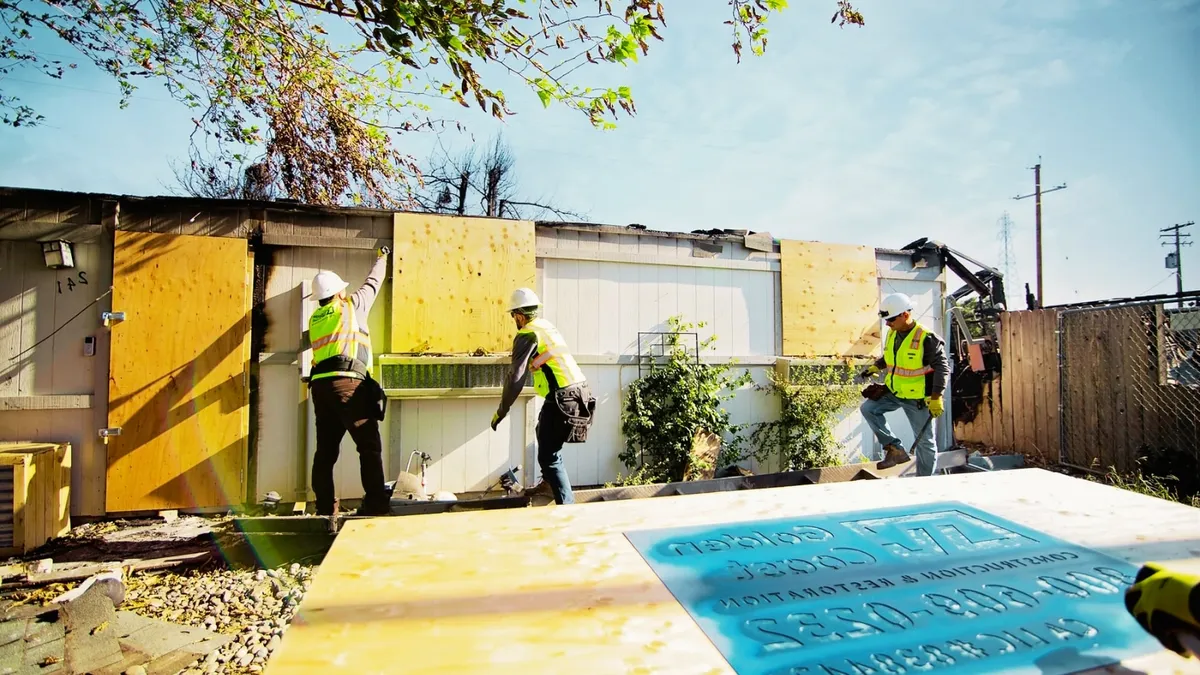
Storm damage drives as much of our board-up work as fire does. Hail through roofing across North and Central Texas, straight-line winds in the Panhandle, and tropical systems on the Gulf Coast all open buildings the same way a fire does, and an opened roof in a Texas summer admits a great deal of water in a short afternoon. The securing work is identical regardless of what made the hole.
Wildfire adds a category of damage that never involves flame at the property. During dry stretches in Central and West Texas, smoke travels well beyond any burn area and settles into HVAC systems, insulation, and soft furnishings in homes that were never threatened. Those properties need odor and residue work without any structural fire damage at all.